
Child-Led and Play-Based Therapy: Questions Parents Are Asking
In honor of National Speech-Language-Hearing Month, we’re highlighting child-led, play-based therapy and why it continues to be such a meaningful approach for many children and families.
For children, play is more than entertainment. It’s how they explore, connect, communicate, problem-solve, and build confidence. In child-led therapy, those natural moments of curiosity and connection become opportunities for growth. Rather than expecting children to fit into a rigid structure, therapists use each child’s interests, strengths, and motivations to support communication in ways that feel engaging and meaningful.
If you’ve been searching for child-led or play-based therapy, you may be wondering what that actually looks like and what qualities to look for in a therapist. Below, we’re answering some of the most common questions families ask when exploring therapy options for their child.
What is child-led or play-based therapy?
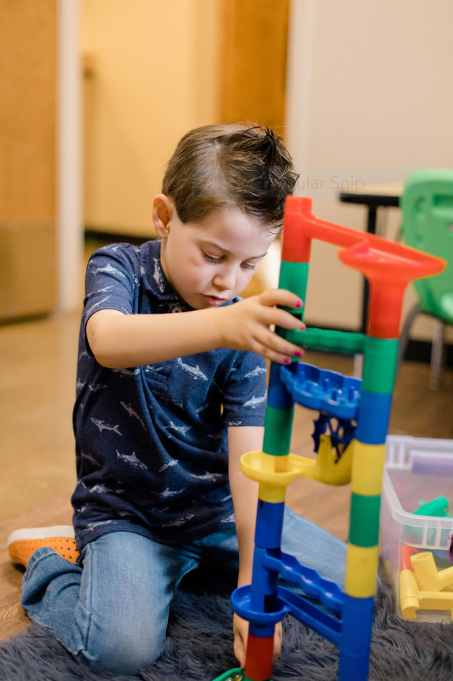
Child led or play based therapy means following a child’s interests, pace, and ideas and meeting kids where they are. Instead of “say this” or “do this,” we join their world and build connection, communication, and skills from there.
What does child-led or play-based therapy look like?
Child-led or play-based therapy might look like letting the child choose the activity, joining their play scheme, letting them take the lead in play, and then expanding on it. It doesn’t mean the adult is doing nothing or letting the child do whatever they want. It means the adult follows the child's natural play and intentionally creates meaningful interactions that will more likely carry over across the child’s different environments.
Why are child-led or play-based therapy important for gestalt language processors (GLPs)?
For gestalt language processors, this is important because language is learned and built through meaningful situations and connected to emotions. Language is best learned naturally and within the child's interests. With a child-led approach, we avoid pressure to perform and instead focus on building authentic communication.

What should the caregiver look for?
A child-led, neurodiversity-affirming therapist will follow the child’s interests, support different forms of communication (gestures, AAC, signs, scripts), prioritize connection over compliance, model language naturally, be flexible to new ideas, and celebrate and honor the child’s uniqueness.
What are the benefits of child-led or play-based therapy?
This form of therapy builds trust and safety, incorporates intrinsic motivation, encourages meaningful communication, supports self-advocacy and autonomy, reduces pressure and frustration, and helps children feel seen and understood.
Stay connected to community stories, therapist insights, and supportive care!